

Rigitrac relies on Eplan Harness proD
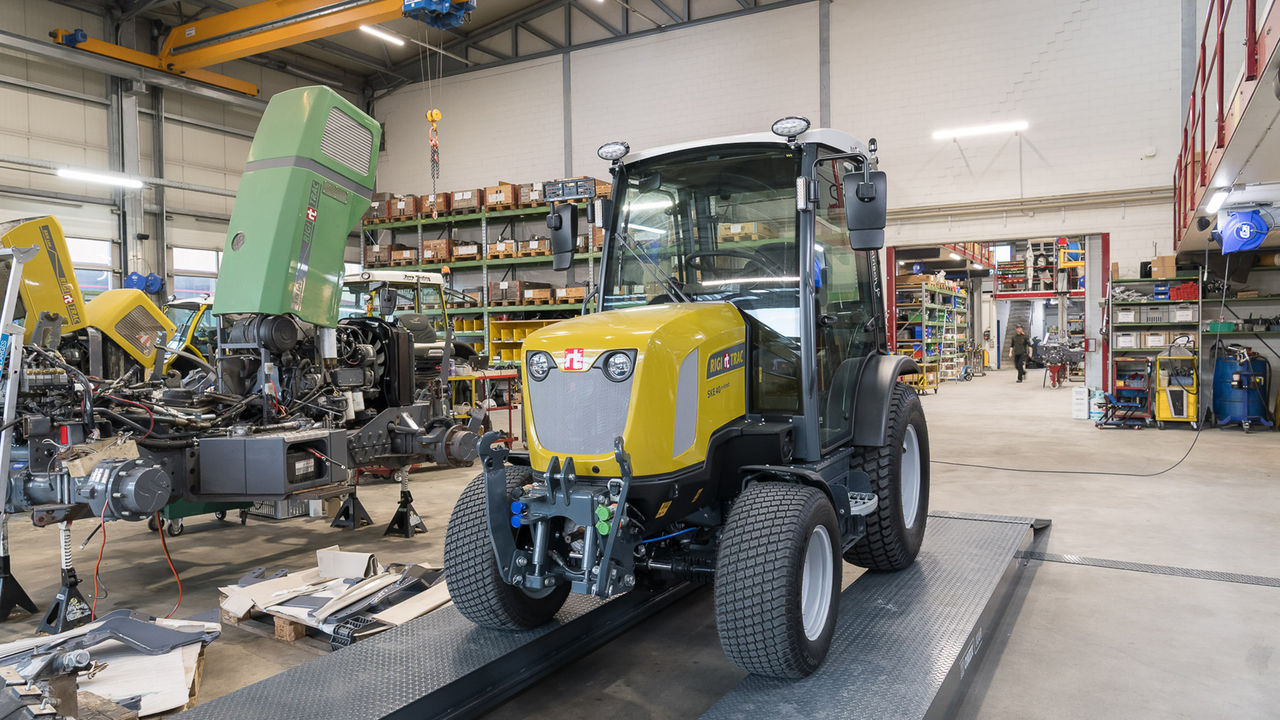
Rigitrac, based in Küssnacht, is building Europe's first production-ready electric tractor. This is made possible in part by the Eplan software Harness proD, which allows electrical engineers to design every wiring harness virtually before a single wire is laid.
By Eugen Albisser (text) and Michael Donadel (photos)
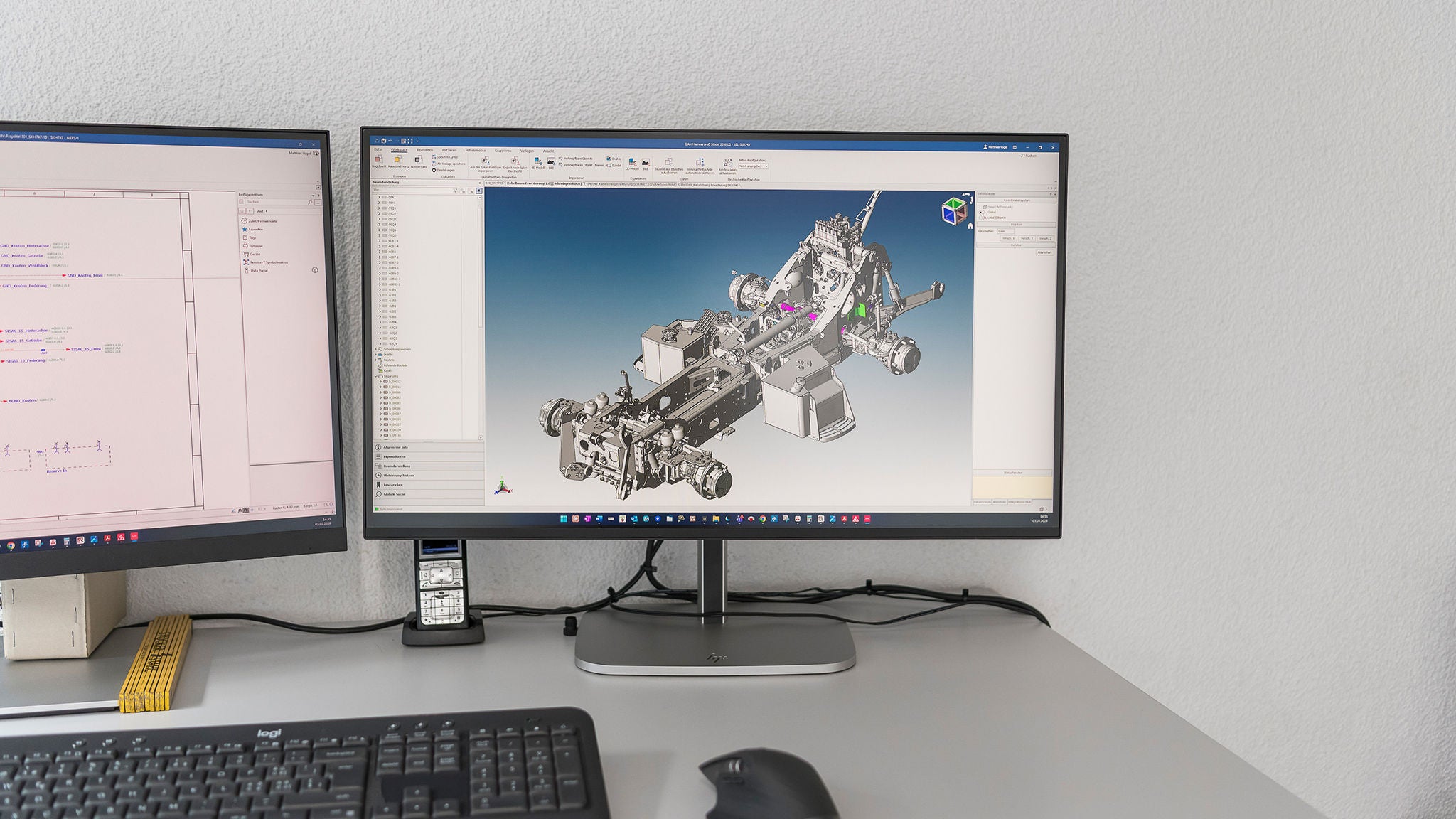
Matthias Vogel rotates a tractor on his screen and then zooms in. He rotates the virtual wiring harness in three-dimensional space, zooms in further, and checks if a cable is too thin or whether a plug is in the right place.
Vogel works at Rigitrac Traktorenbau AG in Küssnacht am Rigi, a company with 45 employees that manufactures custom-built tractors. He is responsible for developing the electrical cabling, for programming, and for drawing up plans with the Eplan software. The image he rotates and moves around on his screen is one of the reasons the company now has something that major manufacturers still cannot offer: a production tractor designed from the ground up as an electric vehicle and certified under EC type approval.
No user manual for electric tractors
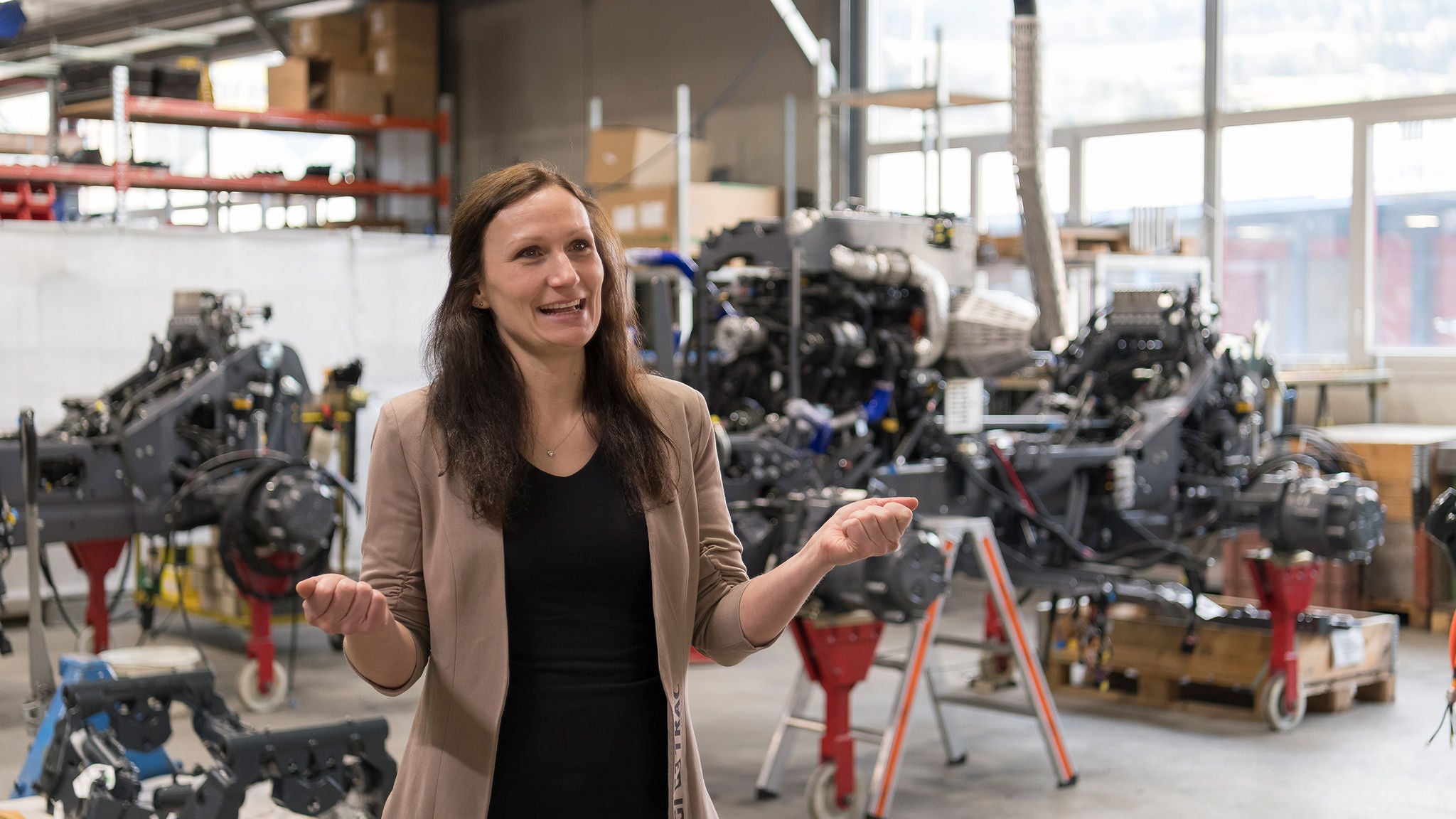
Theres Beutler-Knüsel has been the managing director of Rigitrac since 2016. The company manufactures tractors tailored to customer needs: vehicles with a central swivel joint for maximum safety on the job, cabs with tilt compensation for proper posture, and, most recently, tractors without internal combustion engines. Production is underway in Küssnacht, at the foot of Mount Rigi.
The specific details reveal what inspires Beutler-Knüsel: Rigitrac has installed solar panels on all its roofs, and the metalworking shop houses a battery that the company manufactured itself. The company generates its own electricity— but it has to buy diesel. This explains how the idea for the electric tractor even came about: not from a marketing perspective, but from a certain mindset.
In 2018, two years after she took over as Managing Director, Rigitrac began developing a fully electric tractor. There was no model, no standard, and no study that specified how much energy such a machine would need to perform a given task. "Back then, there were no schools or studies where you could get data," says Beutler-Knüsel. "We had to figure that out on our own." So in 2019, the team built its first prototype tractor: The mechanical base was derived from existing Rigitrac models, while the electrical system was built from the ground up. No one had done this ever before, so Rigitrac had to figure it out on its own.
First the municipal facilities, then the fields
The test tractor taught Rigitrac something that wasn't part of the plan. Agriculture—the tractor manufacturer's primary target market—was not ready yet. Discussions with farmers revealed a great deal of scepticism, and the market would probably not be ready yet in 2019.
But doors opened elsewhere: in municipal facilities, public works departments, and park maintenance services in cities and cantons These customers were under pressure. Low-emission vehicles were in demand, and diesel vehicles in urban areas became a problem. That's exactly where the electric tractor came in: quiet, emission-free, and easy to manoeuvre. It can be used in places where exhaust fumes and noise simply cannot be tolerated, such as in vegetable tunnels, at indoor sporting events, and in city parks.
So Rigitrac made the switch. The first production vehicle, the SKE 40 e-direct, was initially optimised for municipal applications. Agriculture came later. In hindsight, that was the right decision.
Six years later, in January 2026, the SKE 40 e-direct received the Swiss Energy Prize (Watt d'Or) from the Swiss Federal Office of Energy in the Energy-Efficient Mobility category. A total of 200 applications were received, 50 were narrowed down, and four projects won. Rigitrac was one of them. "When you win an award like this, you realise how it's perceived," says Beutler-Knüsel. "That gave us a huge boost." There were new inquiries, new conversations, and people who suddenly knew about Rigitrac—people who had never heard of the company before.
- 1
- 2
1,900 meters of cable and 781 connections
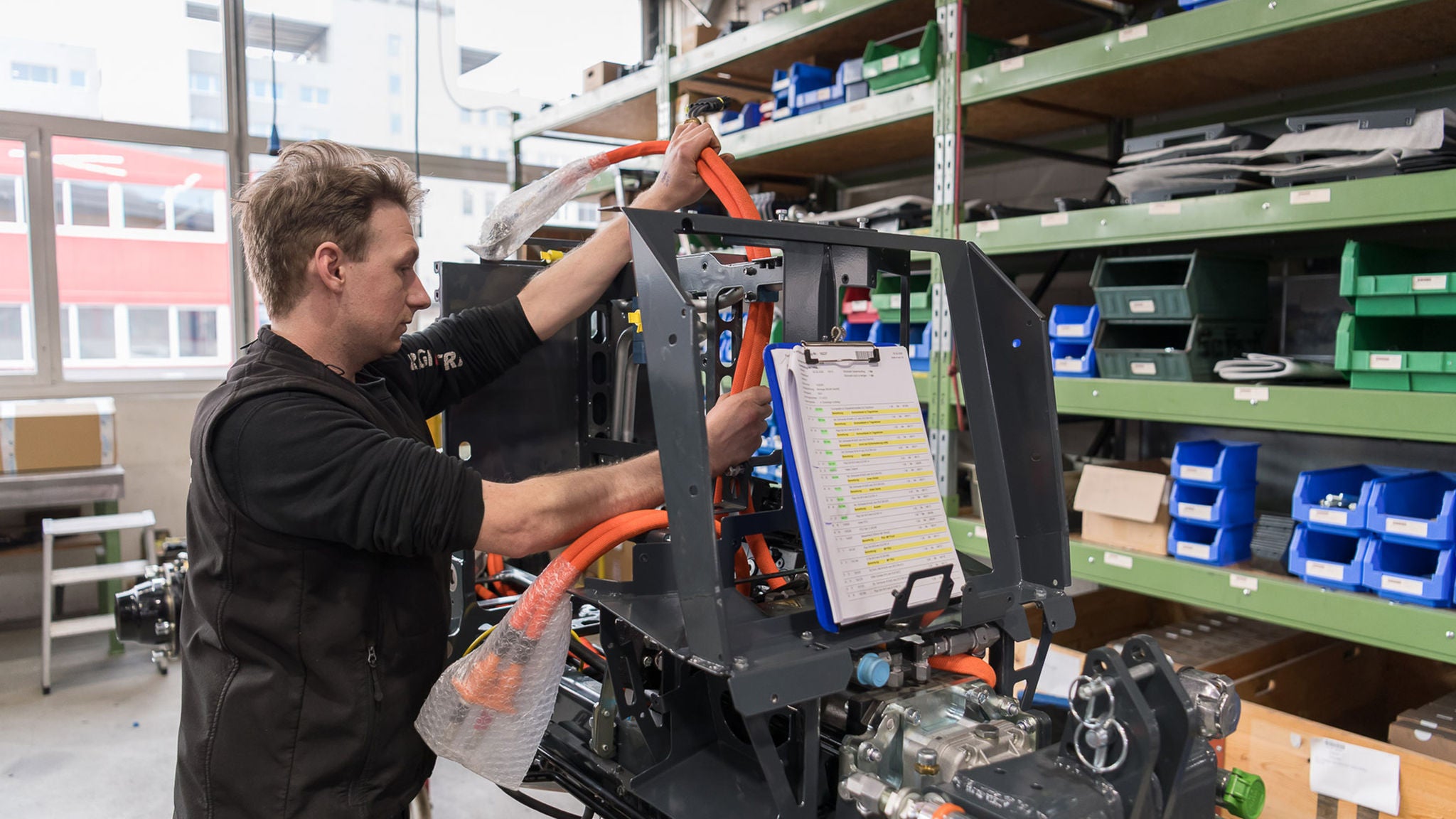
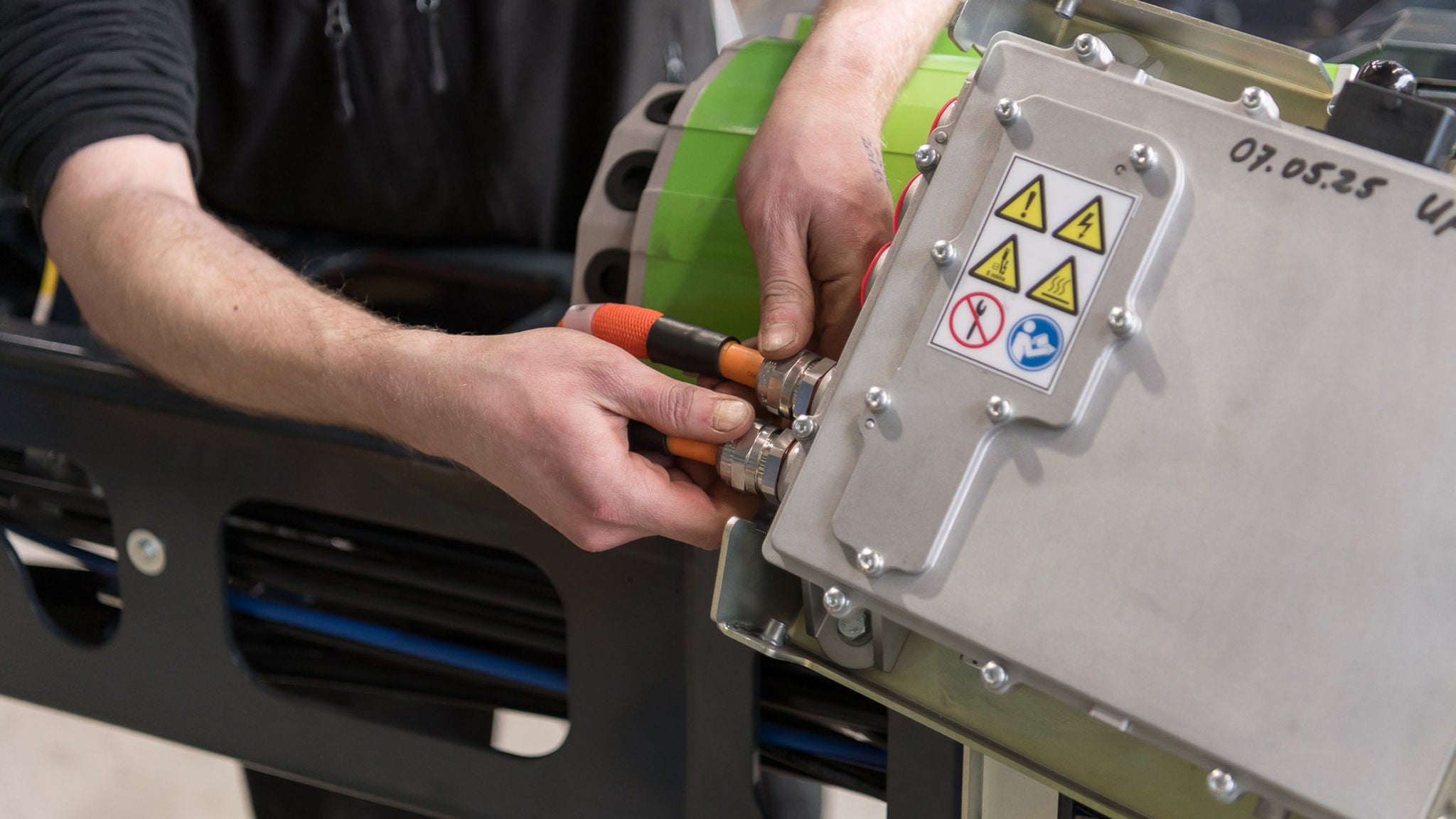
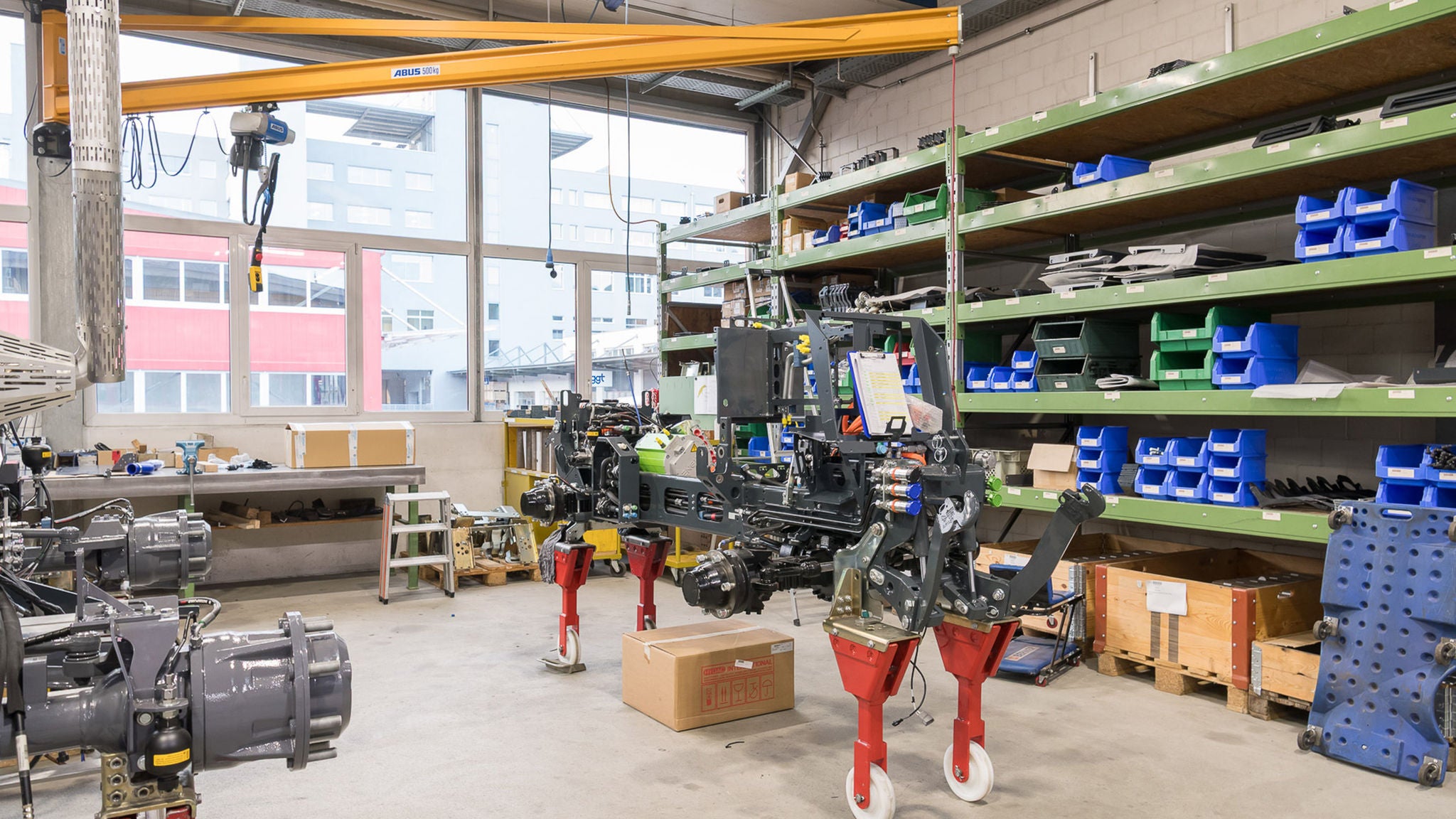
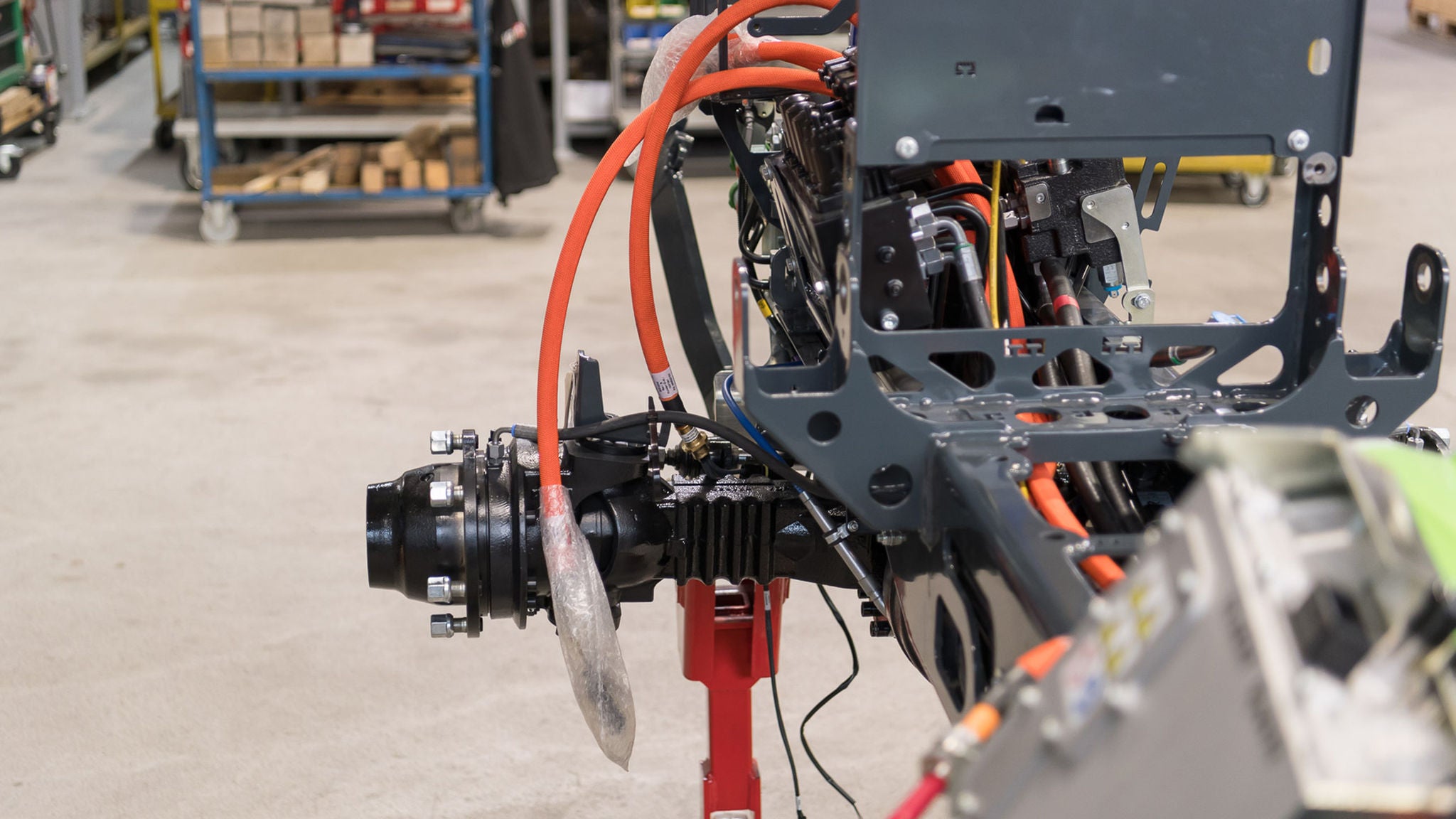
But what's inside this SKE 40 e-direct? Technically speaking, this electric tractor consists largely of electrical components. Batteries, electric motors, control units, sensors, and everything in between: 1.9 kilometres of cable, distributed across 781 connections and 200 electrical components. This wiring harness is what is particularly critical in an electric tractor.
In the past, the planning was still done by hand. You would build a prototype, route the cables, place an order with the wiring harness manufacturer, wait, and then make adjustments. “We were no longer working from the same data source,” recalls Matthias Vogel, explaining the problem. At some point, communication with the manufacturer became so difficult and keeping track of the changes so tedious that it became clear that something had to change.
In 2023, Rigitrac took a step back and evaluated what software solutions were available on the market to assist with electrical systems, particularly wiring harnesses. Three candidates made the shortlist: among them were SolidWorks, which Rigitrac was already using for mechanical engineering, and Eplan. SolidWorks was ruled out at an early stage: The program has its roots in mechanical engineering and does not offer the same level of depth for cable harnesses. "Eplan has a broader and more focused approach to the entire cable harness sector," says Beutler-Knüsel. "When we decide to really do something, we want to have the option of not being restricted again."
Still, the price was a real obstacle. Rigitrac is an SME where every investment is offset. Yet the savings are significant: engineering time is reduced, project durations are shorter, there is less rework, less material waste, and fewer production stoppages. Overall, Rigitrac benefited in many ways throughout the entire process. That is exactly why they chose Eplan.
In addition, Eplan provided support through a flexible subscription model that allows Rigitrac to actively use the license during busy project phases and pause it during slower months. "Then we pool our time. There are certain months when we work just on Eplan and stick with it," says Beutler-Knüsel.
From the scheme to the finished cable harness
Vogel starts every project in Eplan Electric P8, the ECAD software used to create schematics and technical documentation for machines and plants. He draws the electrical scheme, defines which components need to communicate with each other and, in doing so, already specifies so-called split points—that is, points where a cable divides. That sounds like a minor detail. But it isn't. "Our wiring harness has many branches," he explains. "So it makes sense for us to run the cable from the fuse to the junction box and then split it." Making these decisions in the scheme, before anyone starts working with cables, saves a lot of effort later on.
At the same time, our colleagues in mechanical engineering are working with SolidWorks. Data is exchanged directly using native SolidWorks files, not the widely used STEP format. Why? "In Step, it takes quite a long time to export or convert files, especially when dealing with large assemblies," explains Vogel. In other words, straight to the point, without detours: A copy of the SolidWorks file lands in the shared drive, and Vogel drags it into Eplan Harness. The common reference point is the zero point in the 3D space: "We make sure we are starting from the same point." This common zero point may sound trivial, yet it is the foundation that ensures that mechanical engineering and electrical engineering do not work against each other.
As soon as a new machine configuration is available, Vogel creates a 3D model of the wiring harness in Eplan Harness, directly in the virtual tractor. He can see where a cable is too thick, where it won't fit through an opening, and where a plug needs to be repositioned. What's more, he can use this model to directly generate a drawing, which he then orders from the wiring harness manufacturer. "I can handle the planning from start to finish, and it works," says Vogel.
This essentially means that the wiring harness manufacturer no longer receives approximate figures or retroactive requests for corrections by phone. They get a complete, machine-readable order. This reduces errors and speeds up production.
One detail illustrates just how far this integration goes: One pin, that one small metal piece inside the plug, costs one franc at Rigitrac. The same part from the wiring harness manufacturer costs ten Rappen. Vogel doesn't have to decide who uses which pin. The manufacturer optimises this itself, within clearly defined parameters. The planning is precise enough that such details can be outsourced without compromising the overall structure.
Back to the screen
Matthias Vogel rotates the wiring harness one more time. He explains what the difference is. "In the old scheme, there was a number: 0.5," he says, referring to the cross-sectional area of a cable in square millimetres. "When you see it in 3D, the cable looks too small." In the past, this difference wasn’t noticeable until assembly. Today, it stands out on the screen before the first component is delivered.
For Rigitrac, this is more than just an efficient workflow. It is one of the reasons why an SME like Rigitrac can produce something that large manufacturers have not yet achieved—an electric tractor that is actually going into mass production, with European certification and recognition from the Swiss Federal Office of Energy.
Theres Beutler-Knüsel has invested a great deal over the years—in money, time, and dedication. And what about agriculture? Farmers are becoming more interested, she says. But whether the scepticism from 2019 has truly faded, and whether the battery capacity and charging infrastructure will be sufficient for heavy-duty field work, remains to be seen. Either way, the wiring harness for this already exists as a virtual design.
Rigitrac – a perfect family-owned business
Rigitrac Traktorenbau AG, a family-owned company based in Küssnacht am Rigi (CH), has been developing and manufacturing specialised tractors and agricultural machinery since 2004. The company is a pioneer in electric mobility: The “SKE 40” is the first fully electric tractor ready for series production with EC type approval. In 2026, Rigitrac was honoured with the Watt d'Or award and the Swiss Excellence Award for this achievement. Each year, the Swiss company builds about 30–50 tractors ranging up to 120 PS. The distinctive design, featuring a central pivot joint, makes the vehicles up to 1.5 metric tons lighter than comparable models. Manufactured in Küssnacht am Rigi, the tractors are used in Switzerland, Germany, Austria, and Scandinavia—by everyone from farmers to municipalities. Theres Beutler-Knüsel has been Managing Director since 2016; her three sisters also work at the company. Sepp Knüsel, the company's founder and chairman, has stepped down from day-to-day operations.
This is Eplan Harness proD
Eplan Harness proD is the specialised software solution for designing wiring harnesses and cable assemblies and creating the related manufacturing documentation. The module enables precise 3D planning and cable routing in direct integration with mechanical CAD systems. Based on the design data, the system automatically generates comprehensive manufacturing documents, such as template drawings, cut-to-size bills of materials, and detailed assembly instructions. Seamless integration into the Eplan Platform ensures consistent data throughout the entire process, from electrical design to wiring harness production. The tool supports the efficient implementation of complex wiring concepts, particularly in mechanical engineering and the automotive industry.