Eliminating Manual Wiring and Cabling Planning: How Eplan Helps Machine Builders Engineer the Entire Automation System
Eliminating Manual Wiring and Cabling Planning: How Eplan Helps Machine Builders Engineer the Entire Automation System1
The Traditional Problem: Logical Design vs. Physical Reality2
Creating a Digital Thread from Schematics to Installation2
Designing Every Enclosure, Not Just the Main Panel3
Eliminating Manual Cable Planning Across the Machine3
Importing the Mechanical Design3
Automatically Reusing Electrical Design Data4
Defining Cable Paths Digitally4
Automatically Calculating Cable Lengths5
Supporting Faster Assembly and Installation5
Applying the Same Approach to Fluid Power Systems5
Determining wiring and cabling requirements remains one of the most labor-intensive parts of the engineering process. While electrical schematics may define how components are connected logically, translating those connections into physical cables routed throughout a machine or automation cell often depends on manual calculations, estimates, spreadsheets, and field measurements.
The challenge becomes even greater when control systems extend beyond the main control cabinet. Modern automation systems include remote I/O stations, distributed control enclosures, operator stations, sensor junction boxes, motors, safety devices, vision systems, and pneumatic valve islands located throughout the machine. Every one of those devices requires cables, wires, and connections that must be accurately designed, documented, procured, and installed.
Eplan helps eliminate much of this manual effort by creating a continuous digital workflow that connects electrical schematics, enclosure design, machine-wide cable routing, and manufacturing documentation within a single engineering environment.
The Traditional Problem: Logical Design vs. Physical Reality
In a traditional workflow, engineers create electrical schematics that define how devices should be connected. However, the physical implementation of those connections is frequently handled as a separate process.
Engineers or technicians often need to:
- Determine where cables will run throughout the machine
- Estimate cable lengths
- Measure routing paths manually
- Track cable types in spreadsheets
- Create installation instructions separately
- Update documentation whenever designs change
As machine complexity increases, these manual activities become a significant source of engineering hours and project risk.
Even small changes can create cascading problems. Moving a remote enclosure a few feet may affect cable lengths, conduit requirements, wire counts, and material orders. When these calculations are managed manually, mistakes are inevitable.
Creating a Digital Thread from Schematics to Installation
Eplan addresses this challenge by connecting every stage of the process to a common set of engineering data.
The workflow begins in Eplan Electric P8, where engineers create the electrical schematics and define the logical relationships between devices. Every component, terminal, wire, cable, PLC I/O point, and connection is captured within the project database.
Rather than becoming static documentation, this connection data becomes the foundation for downstream engineering activities. When the design progresses into physical implementation, the same data continues to drive the process.
Designing Every Enclosure, Not Just the Main Panel
Many engineers associate Eplan Pro Panel with control cabinet design, but modern machines typically contain far more than a single enclosure.
A typical automation workcell may include: remote I/O cabinets, operator panels, safety control stations, sensor junction boxes, machine-mounted control enclosures and distributed drive cabinets. Pro Panel enables engineers to create detailed 3D layouts for all of these enclosures within the same project.
Because Pro Panel is connected directly to Electric P8, the aforementioned device information and connection data are automatically available. Engineers do not need to recreate information or manually transfer data between systems. This creates an accurate digital model of the machine's distributed control architecture long before manufacturing begins.
Eliminating Manual Cable Planning Across the Machine
While Pro Panel manages the contents of enclosures, Eplan Cable ProD handles the connections between them. This is where many traditionally manual engineering tasks become automated.
Importing the Mechanical Design
The first step is importing the machine's complete 3D mechanical model. Instead of estimating cable routes based on drawings or experience, engineers can work within the actual geometry of the machine.
The digital model includes:
- Machine frames
- Structural members
- Conveyor systems
- Safety guarding
- Robot cells
- Process equipment
This allows cable planning to occur within the real physical environment.
Automatically Reusing Electrical Design Data
One of the biggest sources of engineering inefficiency is re-entering information that already exists elsewhere. Cable ProD eliminates this problem. Connection information created in Electric P8 and Pro Panel is automatically transferred into the cable routing environment.
Engineers immediately have access to:
- Source devices
- Destination devices
- Cable definitions
- Wire information
- Connection relationships
There is no need to manually recreate cable schedules or connection lists. This ability significantly reduces engineering effort while eliminating opportunities for transcription errors.
Defining Cable Paths Digitally
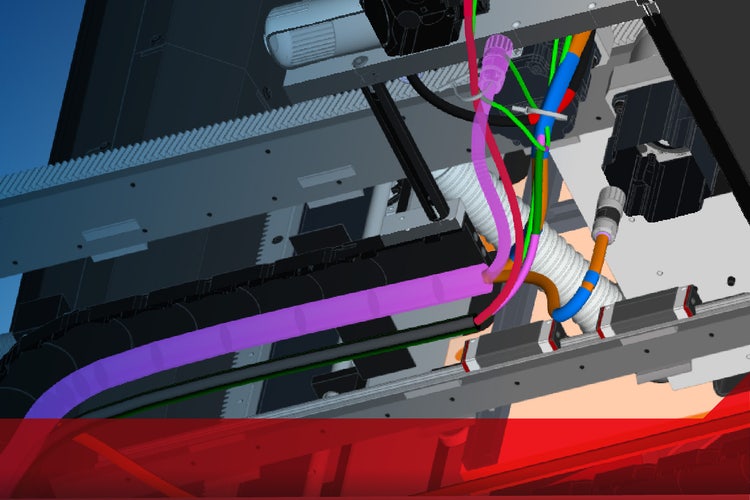
In Eplan, engineers can create cable spaces on the 3D model that represent: cable trays, conduits, wireways, energy chains, and structural routing channels. Routing paths are then established directly within the 3D machine model. Instead of relying on assumptions, routing is based on the actual machine structure.
Connections can be traced from:
- The main control cabinet
- To remote I/O stations
- To distributed enclosures
- To motors
- To sensors
- To actuators
- To safety devices throughout the machine
The entire machine wiring infrastructure can be engineered digitally before installation begins.
Automatically Calculating Cable Lengths
One of the most time-consuming manual tasks in machine design is determining cable lengths.
Traditionally, engineers often rely on rough estimates, historical experience, manual measurements, and eventually field adjustments during installation. These approaches frequently result in excess cable, shortages, or unplanned modifications during assembly. They also result in significant amounts of wasted time, both on the floor and in the engineering department.
Instead, Cable ProD automatically calculates cable lengths based on the actual routed path within the 3D model. This provides several advantages:
- More accurate material procurement
- Reduced cable waste
- Better cost estimation
- Support for pre-assembled cables
- Faster installation
Within Eplan, the information is generated directly from the engineering model instead of measuring cables on the shop floor – and it's retained in the digital twin.
Supporting Faster Assembly and Installation
Reducing engineering effort is only part of the benefit.
Because cable routes are designed digitally, Eplan can also generate outputs that support manufacturing and assembly. Technicians receive documentation based on actual routing paths rather than estimates. Digital assembly instructions can guide installers through the correct sequence of wiring and cabling activities.
This integration helps ensure that the machine is built according to the engineering intent while reducing variability from one build to the next.
Applying the Same Approach to Fluid Power Systems
The same challenges that exist with electrical cabling often exist with hydraulics and pneumatics. While many machine builders still calculate hose lengths and tube routing manually, there’s no reason to do so. Eplan extends its integrated engineering approach to fluid power systems by connecting fluid schematics and 3D routing within the same project environment.
Within Eplan, engineers can:
- Design hydraulic circuits
- Design pneumatic systems
- Cross-reference electrical controls and fluid devices
- Route tubes, pipes, and hoses in 3D
- Calculate precise lengths automatically
- Generate manufacturing documentation
For example, a hydraulic solenoid valve can be linked directly to both its electrical control signal and its hydraulic function within the same project, eliminating the disconnect that often exists between electrical and fluid engineering teams.
One Project, One Dataset, One Source of Truth
The real advantage is not simply automatic cable length calculations or 3D routing. The true benefit is that all engineering disciplines work from the same project database.
Electrical schematics, enclosure designs, machine cabling, hydraulic circuits, pneumatic systems, tube routing, and manufacturing documentation all reference the same engineering data.
As a result, information only needs to be entered once, ensuring a single source of truth throughout the project. Connections between related data remain consistent, and any changes made are automatically reflected across the entire project. This minimizes the need for manual data transfer, reducing the risk of errors and improving overall efficiency. This provides manufacturing teams with accurate, up-to-date information, and installation processes become more predictable and streamlined.
Bringing It All Together
As automation systems become more distributed, determining wiring and cabling requirements manually becomes increasingly difficult. The traditional process of estimating cable lengths, maintaining spreadsheets, transferring data between tools, and measuring routes during assembly introduces unnecessary cost and risk.
Eplan replaces these manual processes with a connected engineering workflow that links electrical schematics, 3D enclosure design, machine-wide cable routing, and fluid power systems within a single environment.
By maintaining a single source of truth from initial design through manufacturing, machine builders can significantly reduce engineering effort, improve accuracy, and confidently design the complete wiring and cabling infrastructure of the entire machine or automation workcell, including every control system component located beyond the main control panel.
Take the Next Step
Ready to eliminate manual cable planning and create a complete digital representation of your machine before it's built? Eplan helps machine builders connect electrical design, enclosure engineering, machine-wide cabling, and fluid power systems into a single, data-driven workflow.
Schedule a personalized demo today and discover how connected engineering can reduce errors, accelerate assembly, and improve project profitability.