Connecting the Dots Between the Electrical Engineer and the Controls Engineer
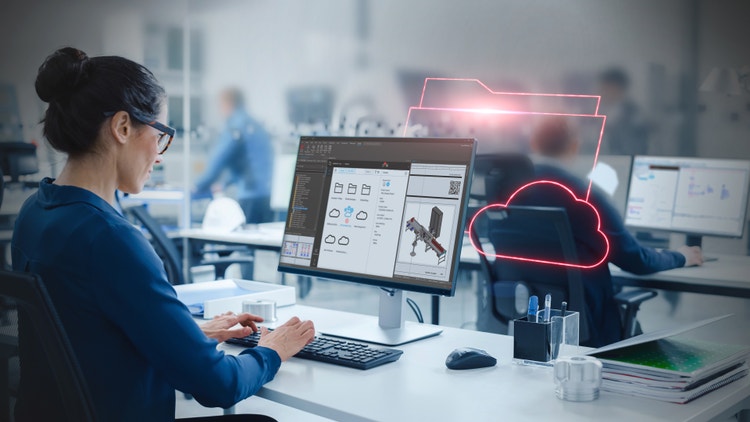
Connecting the Dots Between the Electrical Engineer and the Controls Engineer1
What Data Actually Gets Exchanged In a typical Eplan–PLC integration, the data that flows includes:2
Round-Trip Engineering with PLC and Automation Platforms3
Eplan Partner-by-Partner Breakdown3
Siemens TIA Portal & TIA Selection Tool3
Phoenix Contact PLCnext Engineer4
ABB Ability Automation Builder4
Modern machine building depends on tight collaboration between electrical and controls engineering. The electrical engineer and the controls engineer play distinct but deeply interdependent roles in the machine design process. These two disciplines must stay continuously aligned as designs evolve. The interconnection of specialties isn’t a linear one. Changes to the design can be bidirectional and not just in the design phase, but both parties must stay current throughout the process.
Eplan integrations help ensure that interconnection across the entire design-to-production lifecycle by connecting electrical engineering data with the broader systems they depend on including PLCs, ERP, PLM, 3D mechanical models, and shop floor manufacturing.
The overarching value for machine builders is data continuity: within Eplan, engineering data is created and flows through to (or back from) PLC programming, procurement, cabinet manufacturing, machine assembly, and operator documentation — all without manual re-entry or bouncing through various file types. This shortens order-to-delivery time, improves quality, and helps companies compensate for skilled labor shortages.
How Eplan Bridges the Gap
Eplan's platform and, more specifically, its PLC integrations fundamentally change this dynamic by enabling bi-directional, automated data exchange between the electrical engineer's world and the controls engineer's world:
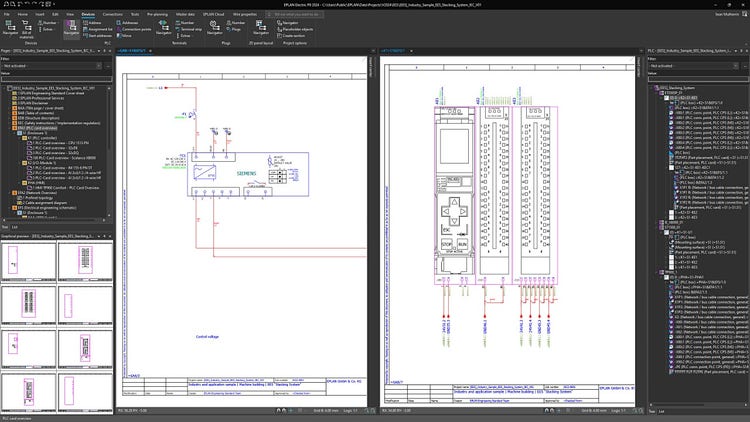
- The electrical engineer creates PLC assemblies, bus system topologies, and I/O assignments directly in Eplan Electric P8. This includes structured PLC parts, macros, and addressing — all within the schematic itself.
- That data is exported via AutomationML (AML) to the controls engineer's PLC programming tool. Device tags, variable lists, I/O configurations, and bus structures arrive pre-populated, ready for programming.
- When the controls engineer makes changes during programming or commissioning (renaming a tag, reassigning an address, adding a module), those changes can be synced back to the schematic within Eplan. This "round-trip engineering" keeps both sides current.
What Data Actually Gets Exchanged In a typical Eplan–PLC integration, the data that flows includes:
- Device/component information: part numbers, terminal assignments, and physical properties from the Eplan Data Portal
- I/O lists: mapping of field devices to PLC input/output channels
- PLC addressing: automatic address assignment that stays synchronized between schematic and program
- Variable and signal lists: tag names, data types, and descriptions
- Bus system topologies: Profinet, Ethernet/IP, and other fieldbus configurations
- BOMs: Bills of Material for hardware procurement
As mentioned above, the data exchange can be bidirectional. This ensures a single source of truth is maintained for the project with all files being updated when changes occur, regardless of whether those changes happen upstream in the electrical hardware phase or the controls programming process.
Round-Trip Engineering with PLC and Automation Platforms
Eplan has a variety of integrations with automation tools that enable bi-directional data exchange. Device information, I/O lists, and controls configuration flow automatically between Eplan and the PLC environment, eliminating manual re-entry and keeping electrical design and controls programming in sync. This significantly reduces errors and accelerates commissioning.
Eplan Partner-by-Partner Breakdown
Eplan’s partner ecosystem delivers deep, bi-directional integrations with leading automation platforms, ensuring seamless data flow between electrical design and PLC programming environments. These integrations enable consistent, up-to-date engineering data across tools, eliminate manual re-entry, and support advanced capabilities like round-trip engineering and virtual commissioning. Below are just a few examples of the wide range of integrations available.
Siemens TIA Portal & TIA Selection Tool
The Siemens integration creates automated interaction between TIA Portal, TIA Selection Tool, Eplan Electric P8, and Eplan Pro Panel. In practice this means:
- Planning data from the TIA Selection Tool (where engineers configure Siemens hardware) flows directly into Eplan Electric P8 schematics — component selections, part numbers, and configurations arrive pre-populated.
- The TIA Portal integration enables bi-directional exchange of PLC addressing, I/O assignments, and device data with Eplan schematics. Changes made by the controls engineer in TIA Portal can be synced back to Eplan, and vice versa.
Rockwell Automation
Rockwell's integration suite is also broad, covering multiple stages of the design cycle, including:
- Studio 5000 Architect & Logix Designer ↔ Eplan Electric P8: Bi-directional integration based on AutomationML. Users can transfer controls configuration and design information in both directions, eliminating manual entry and ensuring that schematic data matches the PLC program.
- Rockwell Emulate 3D ↔ Eplan (new in V2027): A virtual commissioning platform that lets engineers test machines and plant layouts using real PLC logic before the hardware exists. Eplan provides aggregated engineering data to Emulate 3D, enabling early validation.
Phoenix Contact PLCnext Engineer
Uses AutomationML-based integration so that field devices and variable lists from Eplan schematics are automatically transferred and synchronized with PLCnext Engineer. This keeps the electrical planning and PLC programming environments working from the same consistent dataset.
ABB Ability Automation Builder
Enables round-trip engineering: Eplan data (device information, I/O lists) is automatically transferred to Automation Builder. Changes can be updated in both directions, so neither the electrical engineer nor the controls engineer is working from stale data.
The above are just a sample of the companies that have partnered with Eplan. Learn more about all the companies integrating with Eplan in our Partner Network.
Why This Integration Matters
Machine builders face unique pressure because they're bringing together heterogeneous systems from different manufacturers, typically including different PLCs, different drives and different field devices, into one working plant. The electrical engineer and controls engineer must stay tightly synchronized across all of these. The key challenges Eplan helps solve are:
- Data inconsistency between planning, electrical, software, and manufacturing disciplines
- Change management when frequent, late changes cascade across both roles
- Time-to-market pressure requiring both disciplines to work in parallel rather than sequentially
- Skilled labor shortages making it essential to reduce manual effort and enable less experienced engineers to contribute
The Net Effect for Machine Builders

By enabling bi-directional, automated data exchange, teams eliminate redundant manual entry, reduce costly errors, and ensure that both schematics and PLC programs stay synchronized throughout design, commissioning, and beyond. The result is faster project delivery, higher quality outcomes, and a more resilient engineering process that can better withstand labor constraints and late-stage changes.
The upcoming virtual commissioning capabilities (Rockwell Emulate 3D, Siemens AME) push this even further. This allows engineers to validate the interaction between electrical design and PLC logic digitally before physical assembly begins.
Getting Connected
Ultimately, integrating Eplan with PLC systems gives machine builders a powerful advantage by establishing true data continuity across electrical design, controls engineering, and production. As the industry moves toward greater digitalization and virtual commissioning, this connected approach is no longer optional—it’s a competitive necessity.
To see how Eplan can help you streamline your workflows and unlock these benefits, contact us today to schedule a demo or start a deeper conversation.
Learn more