

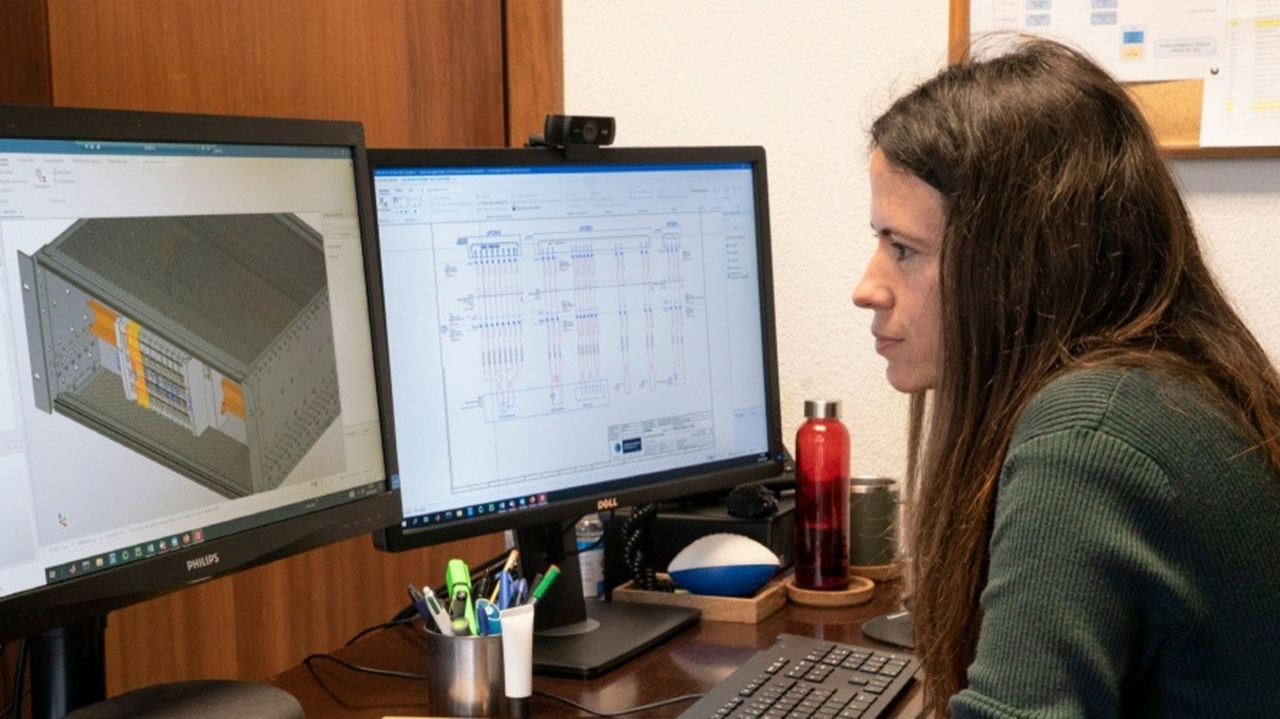
Consistent, integrated, fast engineering solution for IAC system design
The Instituto de Astrofísica de Canarias (IAC), founded in 1975, is one of the leading centres for astronomical research worldwide. With around 450 employees, the institute develops, among other things, readout devices, processing and control systems, detector-characterisation systems and closed-loop control systems. Its renowned Electronics Department is responsible for the design and development of the electronic systems required for both scientific instruments and the astronomical research facilities in which the IAC is involved.
The department also manages the Electronics and Electromagnetic Compatibility laboratories, the Image and Sensors for Astronomy Laboratory and the climate chamber. The IAC operates two of the most privileged sites for astronomical observations: the Teide Observatory in Izaña (Tenerife) and the Roque de los Muchachos Observatory in Garafía (La Palma), both of which rank among the leading observatories in international astronomy.
The standard in ECAD for digital decision-making
In 2018, the Electronics Department of IAC began an internal improvement process with the objective of speeding up its engineering and manufacturing processes and increasing the quality of the documentation generated, without negatively impacting a team that was already carrying a very high workload at that time. To achieve this, they needed a solution which, in addition to meeting these objectives, would also facilitate the standardisation of processes in the design, engineering and manufacturing phases. After carrying out a market study in which several solutions were analysed – and in which the funding model typical of a public organisation played a very important role – the decision was made to acquire Eplan Electric P8.
The standard in computer-aided engineering and design (ECAD), Eplan Electric P8, is a consistent, integrated and fast engineering system used to plan and design the electrical engineering of machines and plant systems. The compatibility of this software with a wide variety of engineering methods – from the most manual processes to highly standardised workflows – makes it an ideal solution for facilitating the integration of the different engineering disciplines within IAC.
This was a differentiating factor, given the requirements presented to the Electronics Department at the beginning of this internal improvement project. The digitalisation and automation enabled by Eplan has greatly facilitated the engineers’ work, optimising processes while also improving the time required and the quality of the decision-making process. Thanks to the digital prototypes designed with this solution, the engineering teams can control both the available space and the weight of the systems to be installed much more efficiently – one of the main challenges they face and probably the process whose optimisation most motivated the launch of this improvement project.
Development and future of the project
The implementation of Eplan Electric P8 began with an initial roadmap, which provided IAC with a clear vision of the optimal path for achieving its objectives. Given the magnitude and importance of the projects that IAC must undertake – among which Harmoni stands out, as the first-light instrument of the Extremely Large Telescope (ELT) belonging to the European Southern Observatory (ESO) – it was decided to develop a standardisation project that could be applied directly to this type of flagship project.
As a public organisation with a very specific budget-management structure, Eplan proposed a five-year plan that also includes Eplan Harness proD and Eplan Pro Panel. Due to the performance obtained in the first two years, IAC decided already in the third year to allocate budget to acquire the complete solution proposed by Eplan. Although other systems have not yet been integrated at IAC, integrating Eplan Electric P8 with Windchill is being considered – something entirely plausible due to the software’s capabilities – as well as a possible extension of the project to GRANTECAN (GTC Telescope) and the inclusion of the European Solar Telescope (EST).

Why the client chose Eplan
Following the market study carried out by IAC, the Instituto de Astrofísica de Canarias chose Eplan thanks to its ability to implement the solution in a fast and optimal manner, as well as its capacity to transfer its accumulated knowledge and experience to its clients. In this regard, the Eplan Data Portal played a very important role. The quality and standardisation of the data make it a tool of great importance in the decision-making process, and it is regularly used by the engineering teams. In addition, the strength of the Eplan consulting team has been a fundamental aspect in choosing Eplan Electric P8 initially and other products of the Eplan Platform in later steps. The plans agreed by Eplan and IAC for the short, medium and long term are one of the main reasons not only for undertaking this project, but also for future joint projects. For all these reasons, IAC considers Eplan to be the ideal technology partner to carry out its engineering and manufacturing improvement processes, optimising and standardising them.
Solutions employed
Eplan Electric P8 is a consistent, integrated and fast engineering system used to plan and design the electrical engineering of machines and plant systems. The software is compatible with a wide variety of engineering methods, from manual creation to standardised planning based on templates. Project data, once entered into the schematic, become the basis for the automated completion of the machine and plant-system documentation. In summary, Eplan Electric P8 offers much more than simply drawing schematics and circuit diagrams.
Eplan FieldSys is a module for field-based cable distribution based on a two-dimensional layout: the plant footprint and the machinery layout, which can be read in DWG or DXF format. With the Eplan Platform, the system configurator can deliver multiple cable-routing options for a network, enabling the connections between the controller and the devices to be planned efficiently and documented permanently. The configurator includes specific rules for cable routing. The cable lengths can be calculated, as well as any additional length required to connect the devices. With this information, Eplan FieldSys generates complete and easy-to-understand reports in a quick and simple manner.
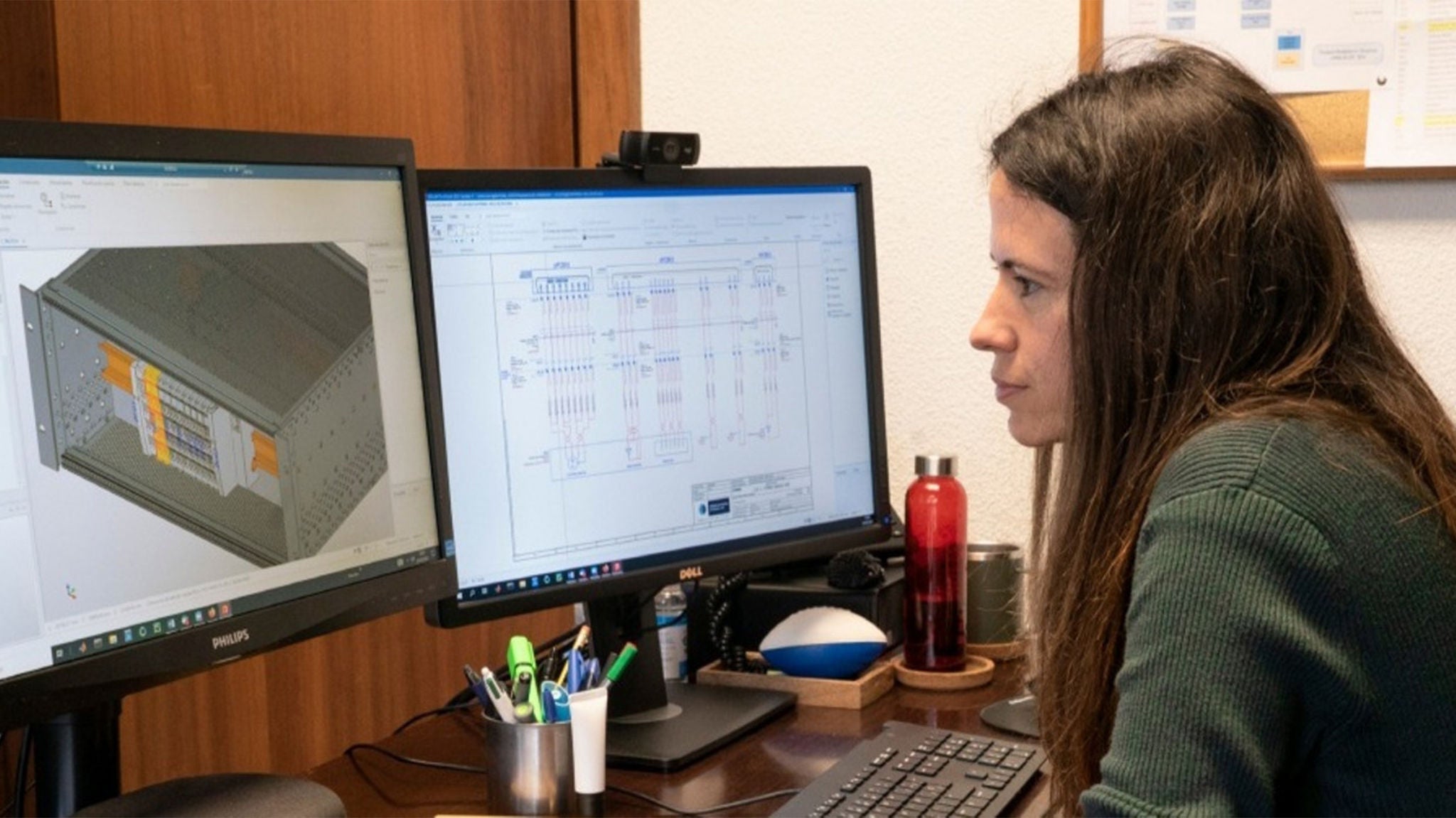
Eplan Pro Panel is an application designed to provide a stable foundation for the automation and industrialisation of electrical-cabinet manufacturing. With Eplan Pro Panel, it is possible to model the 3D design and manufacturing of electrical cabinets, switching systems and electrical power-distribution systems.
Benefits obtained
The first benefit to highlight is the achievement of one of the objectives that most strongly drove this project: automating and digitalising PLC management, which was still carried out manually at IAC and is now handled by Eplan software. This has led to a reduced workload for the engineering teams and to more efficient, optimised processes. Digitalising the engineering and using virtual prototypes has enabled the achievement of two further objectives that were also fundamental for IAC: reducing the workload of its engineering teams and improving both the decision-making process and the time required for it.
In addition, Eplan Electric P8 has allowed IAC to maintain a device library (EDP) that reduces component-manufacturing times and supports the standardisation of electrical-engineering processes, generating documentation for purchasing, labels, cable lists and more. It is also worth highlighting the improved documentation delivered to the engineers who operate and maintain these systems in the astronomical observatories, helping them to keep all documentation up to date quickly and easily.
Finally, the software has also optimised documentation for manufacturing electrical panels: mounting-plate and panel layouts, automatic dimensioning and more efficient control of the space, weight and theoretical volume of the systems to be installed, as well as thermal calculations and cutting lists for cable ducts and DIN rails.
Eplan perspective on the project
Being able to accompany IAC in its internal optimisation process has allowed us to work side by side with the team that develops systems so that the ELT can explore galaxies in the early universe, characterise exoplanets with an extremely high level of detail and study the components of our own galaxy. This is a true privilege. HARMONI is for Eplan the result of an extraordinary collaboration. The creation of an interdisciplinary link between IAC and Eplan reflects the brilliant commitment of the Director of the Electronics Department, Luis Fernando, to collaborative work and to valuing the human team.
The leap from manual methodology to the digitalisation of PLC management through the Eplan Platform gives us the satisfaction of being able to offer our client three of the most important levers in any development process:
- Reduction of unnecessary workload, consequently increased performance.
- Optimisation of decision-making, with a direct impact on reducing errors.
- Reduction of execution time, with an end result of exponential growth.
Although the tools chosen by the team (Eplan Electric P8 and Eplan FieldSys) represent a specific, efficient and tailored use, for us the real success is the professional and personal pride of building a relationship in which being the bridge also means being part of the journey that crosses it. For Eplan, this represents two core values: gratitude towards our now-colleagues for their trust, and the commitment always to be at the level of a project which we know is important, growing and full of promise for everyone.
The opinion of the Instituto de Astrofísica de Canarias
Eplan has allowed us to achieve not only a 2D design (wiring) that makes it possible to manufacture and maintain highly complex scientific instruments, but also to complete the 3D design successfully in such a way that the viability of the physical assembly within the available volume is guaranteed – a volume which in some of our projects is extremely small and subject to unusually strict requirements.
The general implementation of Eplan as the basis for electronic design and development at the Instituto de Astrofísica de Canarias has represented a significant step forward in our capabilities and a major advance in our working methodology. We have standardised the way we approach electronic design activities, which in our case focus on the automation of scientific instruments and require the manufacturing and integration of control cabinets, as well as the incorporation of multiple sensors, actuators and their cabling into the instrument itself.
The implementation of the Eplan Platform in the department is already a reality and will be a constant element in the development of forthcoming projects. The use of the tool allows us to speed up engineering processes, reduce errors, increase the quality of the documentation generated and improve communication within the team.
Enjoying the benefits provided by a partner such as Eplan helps us achieve excellence in our projects and facilitates the standardisation of processes in the design, engineering and manufacturing phases, integrating the different engineering disciplines within IAC.