

Eggersmann: On-board electrical systems in mobile machinery - modular is best
Wire harness assembly can be so simple—even for complex mobile machines. Eggersmann proves it every day. The electrical engineers at the company, which manufactures recycling machinery, have consistently modularised not just the wire harnesses themselves, but also the entire control architecture—with assistance from Eplan Harness proD.
Whether it’s in a backyard garden or in large-scale recycling facilities, compost should be regularly aerated—or “turned,” to use the technical term. This increases the amount of oxygen in the mix and promotes the development of hot composting, which accelerates the process of transforming green waste into compost. It also helps eliminate unwanted elements, such as seedlings.
Professional composting with turners
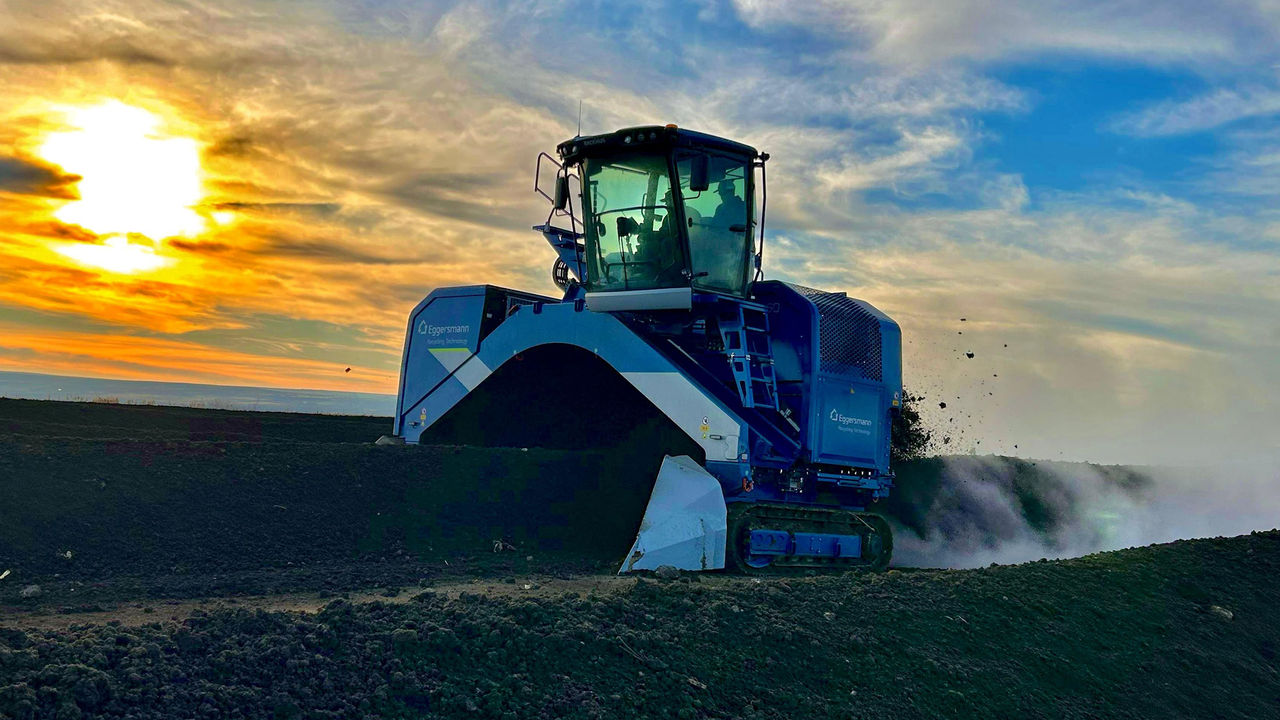
In larger recycling centers, Eggersmann BACKHUS Windrow Turners (picture 1) tackle these tasks. The BACKHUS units are all self-propelled and fully automatic. They are manufactured along with star- and drum-screen sorters and shredding systems at the company’s locations in Wardenburg and Waren an der Müritz in Germany and in Sępólno in Poland. The E-design team is based at the sites in Wardenburg and Halle, which is also the headquarters of the Eggersmann Group, of which the compost machine manufacture is an associate. With more than 1,600 BACKHUS Windrow Turners sold, the Eggersmann brand is the global market leader in this segment.
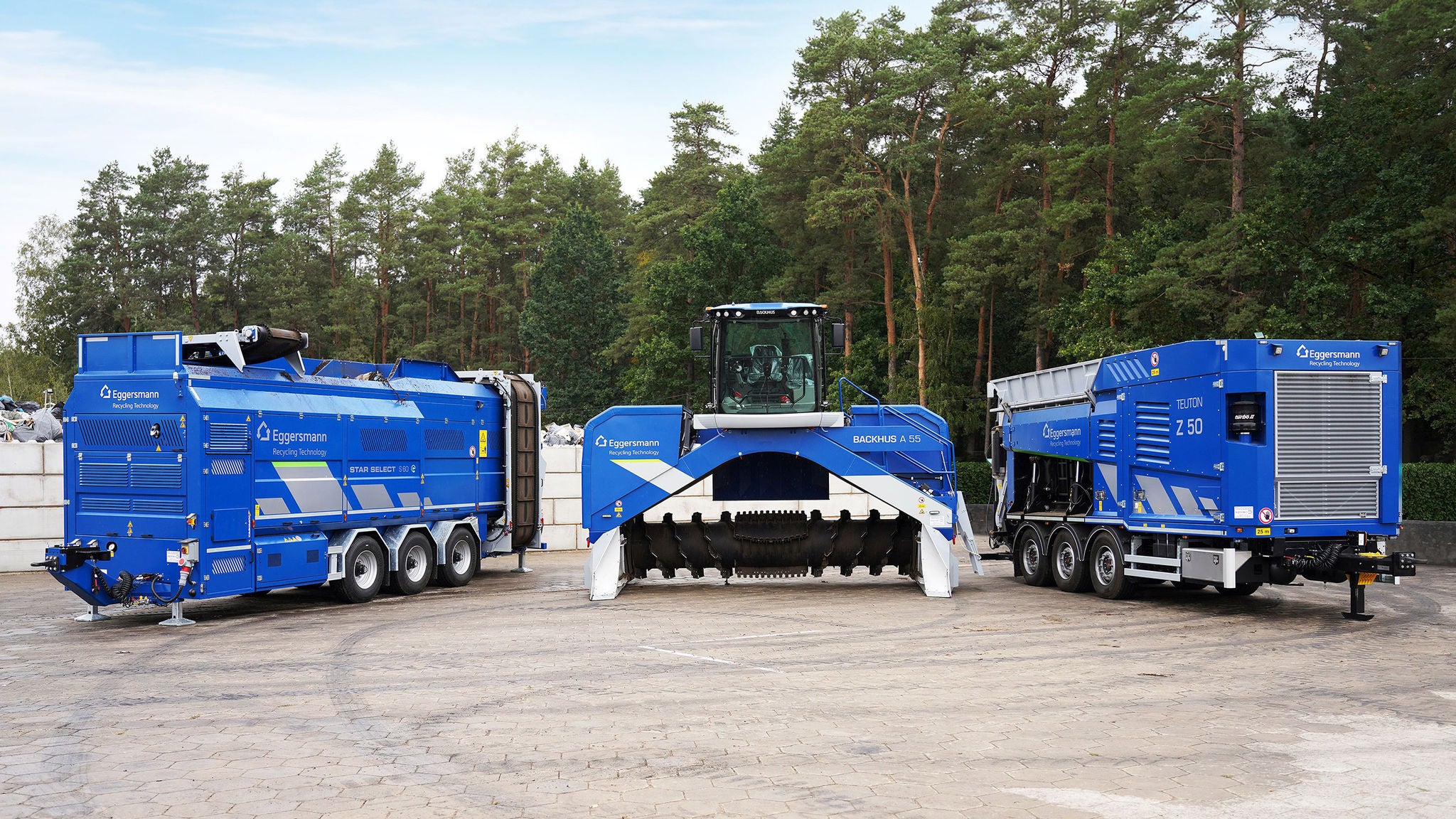
The Windrow Turner uses a powerful rotor as its working tool. The operating height, direction of rotation, and speed of rotation (infinitely variable) all automatically adjust to the properties of the materials being turned, by way of various sensors and actuators. For instance, the older the material, the drier and lighter it becomes, meaning the rotor can turn the windrow (the long row of compost) even faster. Pressure sensors in the rotor detect these parameters and adjust the rotating speed accordingly.
From the large windows of the panorama cabin of the Windrow Turner, the operator has an excellent view of the work area. Furthermore, a wide range of optional features allows the machine to be perfectly adapted to the specific application requirements. These include irrigation systems, mist suppression, concentrate injection systems, fleece winders, and camera packages.
Electrical engineering architecture: completely modular, quick plug connections
AThree key points emerge from this description when looking at the electrical engineering and the wire harness production. Firstly, the electrical engineering and electronics are crucial for the performance and efficiency of a BACKHUS Windrow Turner. Secondly, the wire harnesses are complex and extensive—after all, the turners can measure up to 7.8 meters wide and the cab “towers” over it at a height of approximately 5 meters. Thirdly, the sheer number of options alone results in an impressive variety of wire harness configurations. In other words, it would be very difficult to manage this complexity if the engineers hadn’t implemented a fully modular architecture.
Friedrich Bümmerstede, one of the three electrical engineers responsible for designs at the Wardenburg location: “We grouped things into functional units including the rotor, cabin, hydraulics, and diesel generator. Each has its own wire harness and is connected to the control box via interfaces with multi-pin connectors. We use the same concept for the options, each of which has its own wire harness.”
This makes the wiring very easy. Wire harnesses are installed in all of the individual modules and then connected to the control boxes via multi-pin connectors. Electrical Engineer Christoph Klapproth explains: “These control units, including the circuit board, are the same for the entire product line and are able to cover the full range of options.”
Eplan Harness proD: designing in parallel
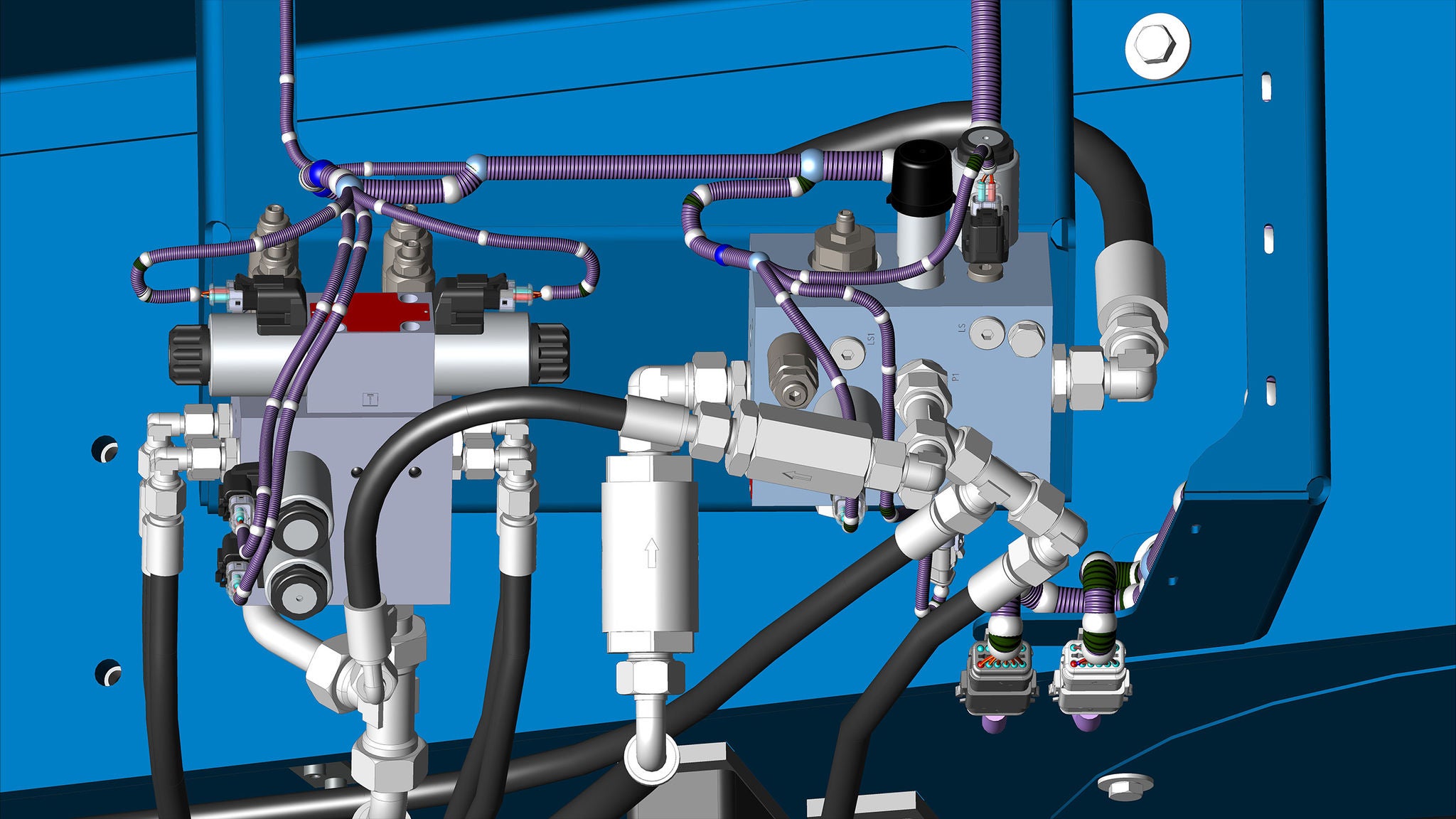
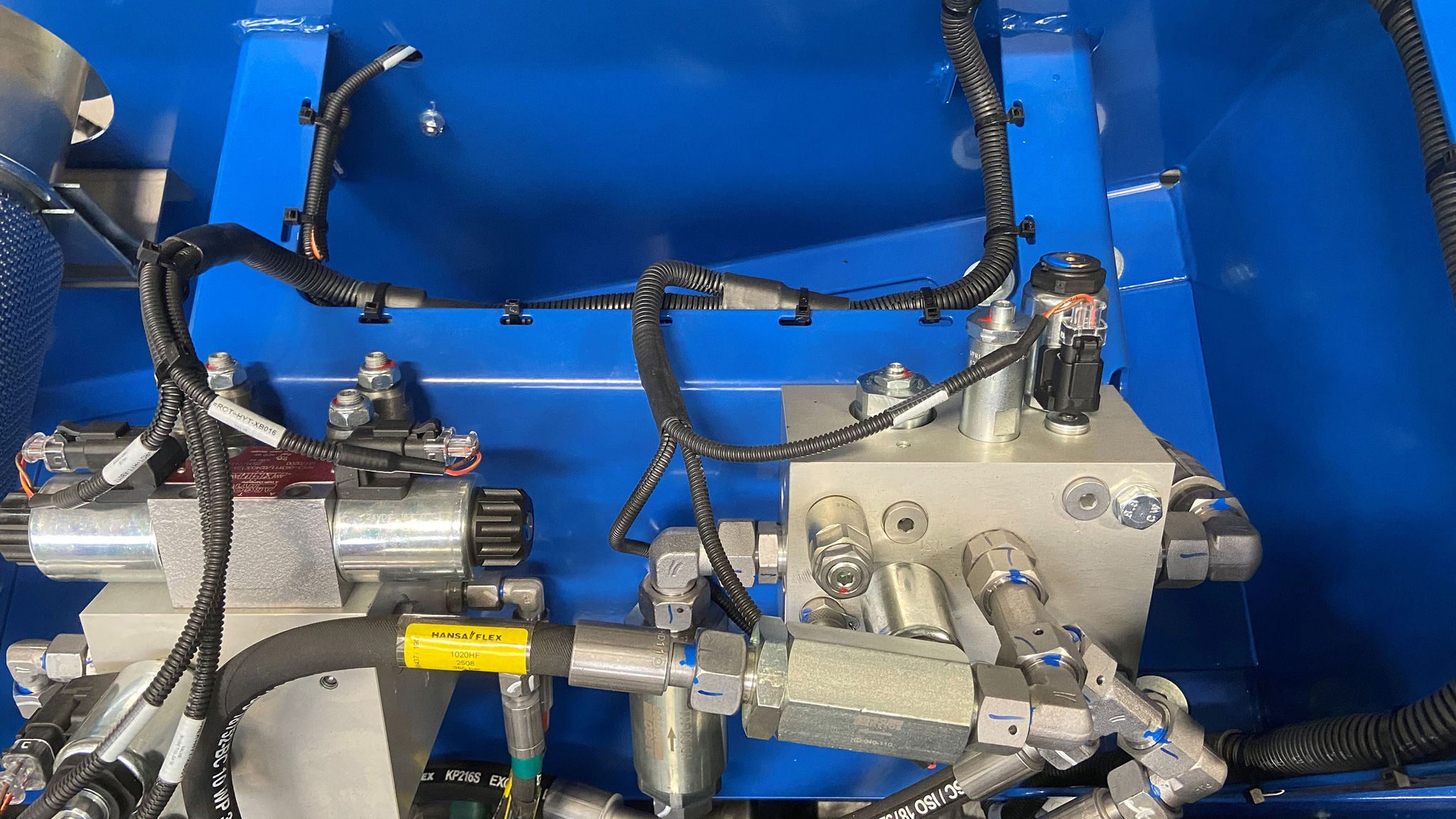
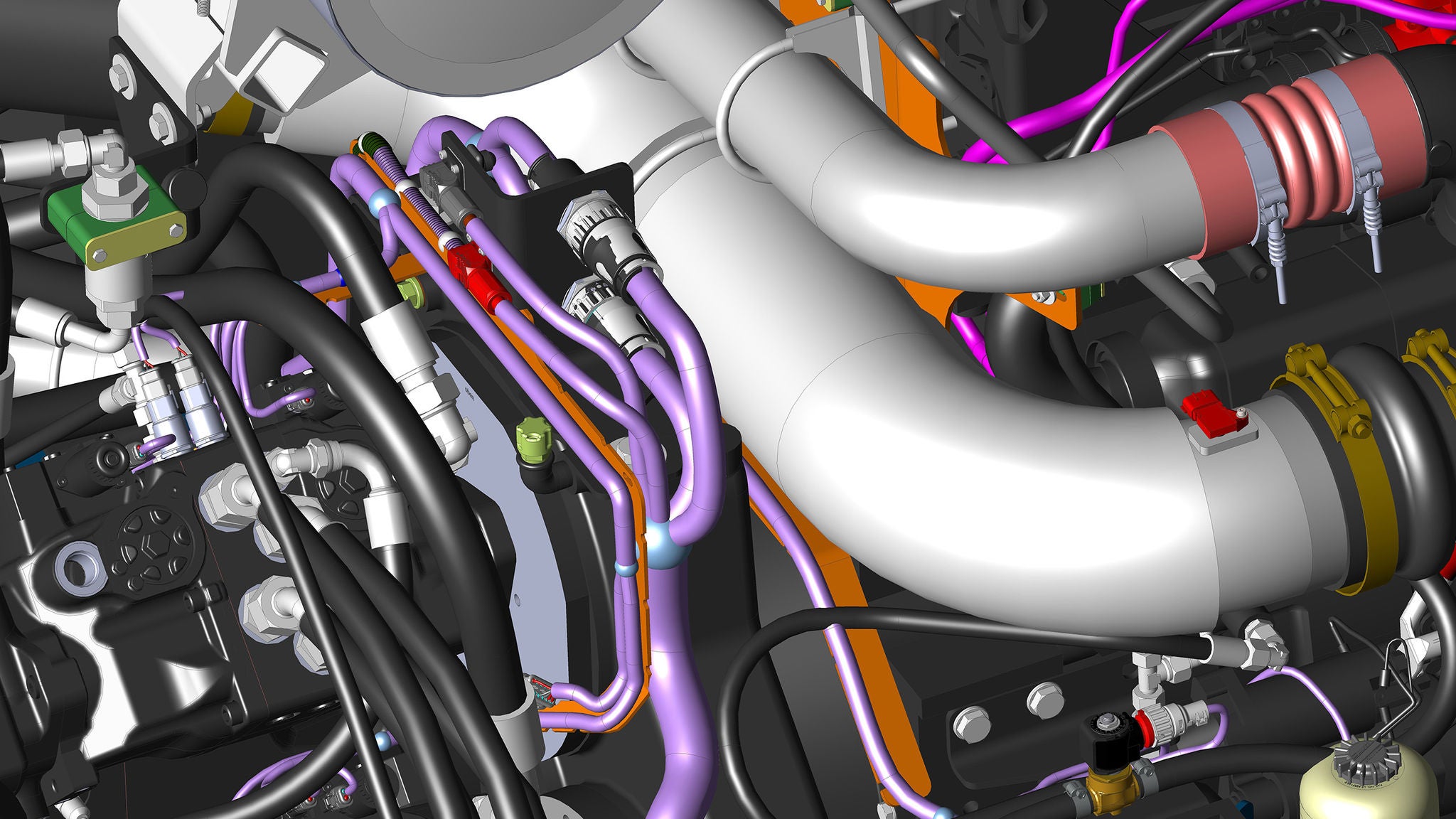
The electrical engineers implemented this truly clever concept using Eplan Electric P8 and particularly Eplan Harness proD—the Eplan tool for wire harness design and documentation. Using Harness proD, cable routing paths in the machine and even in the control boxes can be very precisely defined—even during the mechanical engineering phase.
Friedrich Bümmerstede: “In the past, as the electrical engineers, we were always the last discipline to measure the nearly complete prototype in order to then design and manufacture the wire harnesses. Now we can work in parallel: the mechanical engineering team provides us with a model for planning. Using that as our foundation, we develop the wire harness and then make it available for integration into the mechanical model. This gives our mechanical engineering coworkers early insights into our designs, which appreciably simplifies the coordination and layout of routing paths—for instance for hydraulic hoses.”
Plug and play with coded, multi-pin connectors
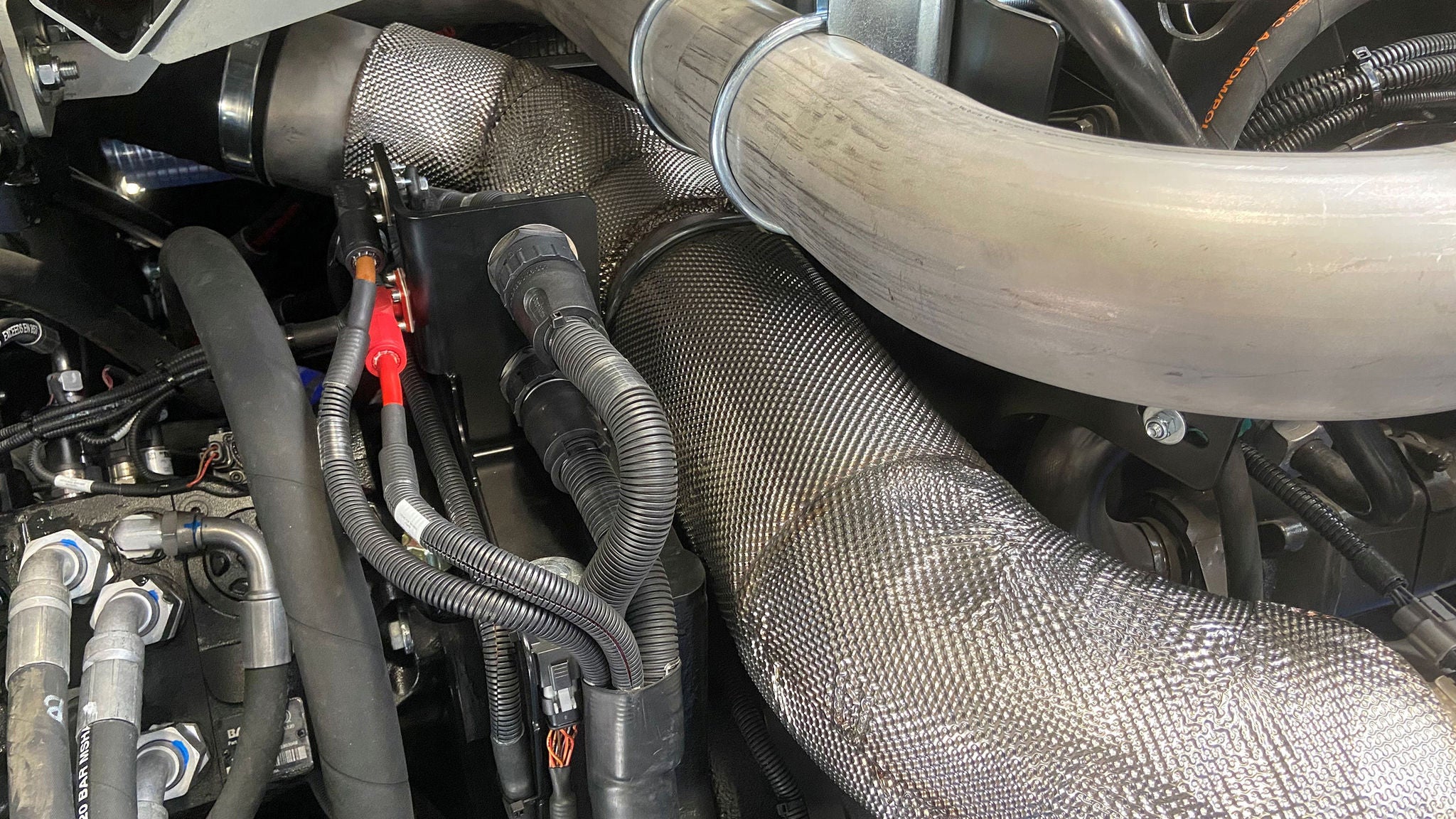
The modular concept also creates significant advantages for production: the term plug-and-play is absolutely appropriate in this case. André Ledesma Kirchner says: “Assembly technicians can thoroughly test the ready-to-connect wire harness before shipment, and when installing the modules, the production team simply has to plug the connectors into the easily accessible control box housings. This is very quick and mistake-proof, especially since the connectors are color-coded.”
For options such as irrigation, misting, etc., there are separate connectors and special wire harnesses. As a result, more than fifty small and larger wire harnesses can be installed in a single machine—and they can all be quickly integrated into the vehicle’s electrical system or connected to the corresponding control box with a simple plug, none of which requires specialised knowledge.
Increasing share of electrical/electronic systems
As André Ledesma Kirchner sees it, this concept has significantly accelerated production times. Furthermore, the benefits of modularisation will become even more apparent in the future—the electronics and electrical systems in mobile machinery will continue taking on an increasing number of tasks, thus becoming even more complex.
To consider just one example: so as to comply with country-specific emissions regulations, Eggersmann offers the same machine model with up to six different engine variants. Modularisation’s advantage here is that the machine’s control box is always the same, while the engine wire harness—with connections for the necessary sensors—is specific to each engine. The electrical variants are displayed as options on the Eplan Platform.
“Work in progress”: integration P8 and Harness proD—and connecting to third-party suppliers
To ensure data consistency, the electrical engineers at Eggersmann in Wardenburg and Halle merged the Eplan Electric P8 and Eplan Harness proD databases—with support provided by Eplan. Christoph Klapproth: “That was a major challenge, and we’re not quite finished yet. In principle, though, it’s working already. For example, first we create a connector in Electric P8 and select the appropriate contacts and accessories. In Harness proD, the same items can then be found with the same part numbers. So we’ve created a platform for both programs and can now depict and modify wire harnesses in Electric P8. This makes it easier for us to design the harnesses and also to provide the data for assembling the cable systems.”
This is how the division of labor now works: “The wire harnesses are designed in 3D using Harness proD. However, it is easier to depict the lengths and junctions of the wire harness on a wire harness drawing in Electric P8. The tables in the evaluation templates—which we developed ourselves—contain all the information the third-party manufacturer needs: destination, source, color, length, etc.”
In addition, the manufacturer receives HTML files generated by Harness proD that include 3D views of the wire harness routing inside the control panel. As to whether this data is actually used, Christoph Klapproth enthusiastically affirms: “Yes! By the third-party suppliers who manufacture not only the wire harnesses for us but the control cabinets, as well. These wire harnesses are small, and the installation space is tight. A 3D view is very helpful in this regard, especially since it can be opened in any browser.”
Also practical for maintenance
The advantages of the modular electrical engineering and electronics architecture, based on the Electric P8 and Harness proD configuration platforms, even extend beyond the manufacturing process. Friedrich Bümmerstede: “In the event of a fault or defect, any wire harness—large or small—can easily be replaced without any risk of mixing them up. All the wires and connectors are coded with individual designations.” This simplifies repairs should the need arise.
Not just for turners and not just in Germany
Not only are the windrow turners developed according to this concept—and modeled using the Eplan Platform—but so are the sorting machines and shredders, which are designed in Wardenburg and Halle. This enables Eggersmann to offer a complete range of mobile recycling machines—Made in Germany—all featuring innovative, practical architecture for power supply and control features, from the rotor’s hydraulic drive to the controls in the operator’s cab and the lighting on its roof.
Author: Gerald Scheffels, freelance trade journalist, Wuppertal, Germany
Eggersmann Group: Everything for Recycling—Worldwide
The Eggersmann Group, headquartered in Halle, Germany, is a network of companies operating nationally and internationally in the fields of construction, recycling, and composting. A bit more than two-thirds of the circa 1,300 employees work at the group’s 16 German locations. These include the production facilities in Wardenburg and Waren an der Müritz, where Eggersmann develops and manufactures mobile machinery such as windrow turners, shredding systems, drum and star-screen sorters, and wind sifting units.
In collaboration with other companies in the group, Eggersmann is also able to design and build complete recycling and composting plants (including concrete structures) worldwide. For the windrow turners described here, which bear the BACKHUS brand name, Eggersmann is the global market leader.